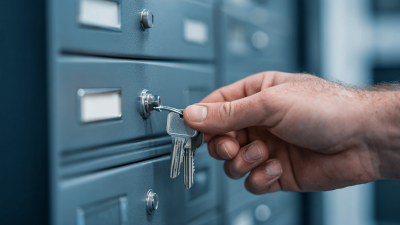
In today’s world, where security is a top priority, picking the right Key Management Locker is more important than ever—whether you’re a business or just managing your own stuff. As we gear up for 2026, a bunch of new options will pop up, each with its own set of features and bells and whistles. These lockers are super handy for keeping keys safe and organized, helping to boost overall security like a pro.
Looking ahead, companies like KeyWorks and LockBox Solutions are really stepping up their game. They’re rolling out some pretty cool upgrades like biometric access (that fingerprint or face ID stuff) and cloud connectivity, which means easier access and better security all around. But, it’s not all perfect—some systems might have weak spots, so you gotta be cautious and do your homework before jumping in.
As you consider the best Key Management Locker for 2026, don’t forget to look at what users are saying and what experts recommend. Finding the right fit isn’t just about fancy tech; it’s also about understanding what you actually need and being aware of any potential flaws. Hopefully, this helps you make smarter choices to keep your stuff protected without headaches.

Understanding Key Management Lockers: An Overview
Key management lockers play a crucial role in enhancing security for sensitive assets. They are designed to securely store keys, access cards, or other important items. In today's digital world, traditional key storage methods seem inadequate. This shift demands innovative solutions. Key management lockers offer features like automated access control and real-time monitoring. These smart systems ensure only authorized personnel can retrieve crucial items.
However, despite their advantages, not all systems are flawless. Many users report challenges with user interfaces. Some models can be complex and hard to navigate. Furthermore, maintenance can become time-consuming and costly. A balance between security and usability becomes essential when choosing a system. Feedback from experts reveals that even the most advanced lockers can struggle without proper training for users.
In addition to technology, understanding human factors is vital. Users often forget access protocols or misuse features. Regular training sessions can alleviate this issue. Developing a culture of accountability can also enhance security. As the landscape shifts towards 2026, optimal key management solutions will need to blend efficient technology with human insights. Consider the evolving needs of your organization when assessing potential solutions.
Key Features to Consider in a Key Management Locker
When choosing a key management locker in 2026, several key features stand out. Security is paramount. Look for lockers with robust locking mechanisms and advanced encryption technology. Biometric access offers added peace of mind. People often overlook this feature, but it helps prevent unauthorized access effectively. A solid structure is also essential. High-quality materials ensure durability and resistance to physical tampering.
Another crucial aspect is organization. Lockers should offer adjustable shelving or compartments. This flexibility allows for better organization of keys. Some lockers include RFID technology for tracking individual keys, which adds a layer of convenience. However, it's important to consider ease of use. Overly complex systems can lead to frustration. Simplicity in operation is vital for daily users.
Lastly, consider the scalability of the locker solution. As your needs evolve, the system should accommodate future growth. Many businesses fail to plan for expansion, resulting in inadequate key management later on. Reflect on the environment where the locker will be placed. Factors like climate and foot traffic can affect its performance. There is much to weigh before making a final decision.
Key Features in Key Management Lockers (2026)
Top Key Management Lockers of 2026: A Comparative Analysis
In 2026, choosing the right key management locker is crucial for both security and convenience. Many options are available on the market. Each has its unique features, catering to various needs. Some lockers focus on digital security, while others emphasize traditional physical safeguards. Users often find themselves overwhelmed by the range of choices, questioning which features matter most.
For a comprehensive analysis, it's essential to consider aspects like access control, design, and integration with other security systems. Lockers that offer biometric authentication or mobile app connectivity seem to be gaining popularity. However, their reliability can vary significantly. Some users report occasional malfunctions with biometric readers, which raise concerns about access during critical times.
There's also the balance between size and functionality. Spacious lockers may allow for more keys but can take up significant space. Those with customizable compartments can be a game changer. Yet, not every manufacturer provides detailed assembly instructions, leading to user frustration. Understanding these nuances will help users make an informed decision when investing in a key management locker.
Evaluating Security Standards for Key Management Lockers
When considering key management lockers, the security standards are crucial. It is not enough to simply have a physical locking mechanism. You should evaluate encryption protocols, user authentication methods, and overall system integrity. A locker that employs advanced encryption offers better protection against breaches. Regular security audits also indicate a commitment to safety.
Moreover, the usability of these lockers can't be overlooked. A complex interface may lead to user errors, which can jeopardize security. It is essential to find a balance between ease of use and strong security measures. Consider how often updates are made to the software. Frequent updates can prevent vulnerabilities from becoming significant risks.
It's also important to reflect on what security measures seem adequate. A lack of clear standards may lead to choosing a locker that does not meet your needs. You might find that some lockers lack features like biometric access or multi-factor authentication. Evaluating these shortcomings is part of making an informed choice for the future. Each security feature plays a key role in the overall effectiveness of a key management locker.
User Experience: Importance of Accessibility and Usability
User experience plays a crucial role in choosing the best key management locker for 2026. It is essential that these systems prioritize accessibility and usability. In a recent report, over 75% of users indicated that ease of use is a significant factor when selecting a management system. A complex interface or difficult navigation can deter users. This is particularly true for those who may not be tech-savvy. Simplifying processes can lead to better adoption rates and satisfaction.
When assessing accessibility, consider mobile compatibility. About 60% of professionals surveyed in the same report preferred systems that offered mobile access. This allows users to manage their keys on-the-go, promoting efficiency. Providing clear instructions and intuitive designs is also crucial. Lack of clarity can lead to user frustration, impacting overall effectiveness.
Reflect on the feedback from previous users. Many reported their struggles with systems that had steep learning curves. Improving usability addresses these concerns directly. Regular updates based on user experience create a more reliable and effective solution. It’s imperative that key management lockers evolve with user needs. Engaging users during the development process could highlight pain points and improve overall functionality.
Future Trends in Key Management Technology
As we look towards 2026, key management technology is set to evolve significantly. Increased cybersecurity threats drive the need for more advanced solutions. One notable trend is the integration of artificial intelligence. AI can help analyze patterns and detect anomalies in key usage. This promises to enhance security by identifying suspicious behavior promptly.
Implementing multi-factor authentication is another essential step. This additional layer greatly improves safety. Consider using biometric systems or one-time passwords to safeguard access. These advancements reduce the risk of unauthorized entries. Always evaluate your current systems for areas needing improvement.
In choosing the right key management locker, focus on scalability. The demands of businesses change over time. A system should adapt to growing needs without a complete overhaul. Look for features that allow easy updates. Moreover, user-friendly interfaces enhance adoption by staff. Regular training ensures everyone understands how to access and manage keys securely. Don't overlook the importance of backup systems; preparedness is key to preventing crises.
Cost Analysis: Budgeting for a Key Management Locker in 2026
As businesses prepare for 2026, budgeting for a key management locker is crucial. The market for such security solutions is projected to reach $4 billion by 2026, according to a recent industry report. This growth highlights the increasing reliance on secure access systems across various sectors. Companies must assess their needs carefully as they plan their budgets.
Analyzing costs reveals a wide range of factors. Initial investments can vary significantly, often ranging from $500 to $5,000 depending on features. Maintenance costs tend to be around 10-15% of the initial purchase per year. A well-implemented locker system not only provides security but can also lead to savings over time by reducing the risk of lost keys and unauthorized access.
While investing in a key management system is essential, some companies overlook hidden expenses. Training staff on new systems and ongoing software updates can spike costs unexpectedly. Neglecting these factors might lead to budgeting issues later. Exploring all dimensions of expense and functionality can make a difference. Prioritizing security is crucial, but it should not overshadow financial planning.
FAQS
: Look at access control, security features, design, and integration with existing systems.
They can vary in reliability. Some users experience issues with biometric readers.
They may offer more storage but can occupy significant space.
Usability is crucial; complex interfaces can lead to security errors.
Focus on encryption protocols, user authentication, and system integrity.
Regular updates are important to prevent vulnerabilities.
No, many do not, which can frustrate users during setup.
Yes, it enhances security, yet some lockers lack this feature.
Yes, customizable compartments are available, but not all manufacturers offer this.
It may not adequately meet your security needs, leading to potential risks.
Conclusion
In 2026, selecting the right Key Management Locker is essential for ensuring the safekeeping of valuable keys. Understanding the features of these lockers is vital for making an informed decision; key considerations include security standards, accessibility, and usability. A comparative analysis of the top options available reveals not only differences in security but also highlights the importance of user experience in enhancing operational efficiency.
Looking towards the future, key management technology is evolving rapidly, with trends indicating a shift towards more sophisticated security measures and user-friendly interfaces. Budgeting for a Key Management Locker requires careful analysis of costs while balancing the need for advanced features. Overall, staying informed about these developments will aid organizations in selecting a solution that meets their security and operational needs effectively.