
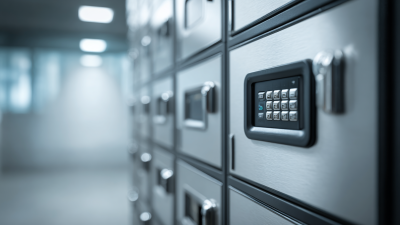
Today’s world is way more security-minded, so picking the right lockable key cabinet really matters if you want to keep things safe. According to Security Magazine, more than 30% of businesses face theft because they don’t have proper key management in place. That’s why more and more people are on the lookout for reliable ways to store keys. These cabinets aren’t just about locking stuff up—they actually help things run smoother by keeping unauthorized folks out.
Honestly, it can be pretty overwhelming for companies trying to figure out which lockable key cabinet fits their specific needs. Things like size, what it's made of, and the locking mechanism all come into play. IBISWorld reports that the global market for key storage is expected to grow by about 4% each year. That just shows how much everyone’s starting to see security as a big deal—whether it’s a small business or a huge corporation.
With so many options, it’s tempting to just pick whatever seems best, but honestly, it pays to think about features that boost reliability. Cabinets with fancy, high-tech locks will usually do a better job protecting things. That said, not all products are created equal—some might be cheaper but less sturdy. Figuring out what you really need can be a bit confusing, and striking that tricky balance between cost and security is no walk in the park. Still, in the end, investing in a solid lockable key cabinet can really protect your assets and give you some peace of mind.

Understanding the Importance of Key Security in Various Environments
In today's world, key security is a critical concern. Organizations report that 65% of thefts stem from lost or stolen keys. This statistic emphasizes the need for secure storage solutions. Whether in offices, schools, or service centers, a lockable key cabinet serves as a vital line of defense against unauthorized access.
Different environments require varying levels of key security. Educational institutions often deal with large foot traffic and diverse access needs. A report indicates that 75% of schools have experienced key-related issues. This shows a clear need for reliable storage systems. In comparison, businesses may focus on employee access levels to minimize risk. Regular audits of key inventories can reveal weak points. Yet, many organizations overlook this critical aspect.
Choosing the right key cabinet can prevent many security breaches. Lockable cabinets should offer durability and a combination of mechanical and electronic locking mechanisms. An estimated 40% of firms do not regularly evaluate their key management systems. This can lead to vulnerabilities and potential loss. Implementing a structured approach to key storage enhances overall security.
Revolutionizing Access Control: The Landwell i-keybox Intelligent Key Cabinet with Auto Sliding Door
In today's rapidly evolving technological landscape, the management of physical access and keys has emerged as a critical concern for businesses across various sectors. Traditional key management systems often fall short, exposing organizations to security risks and inefficiencies. The introduction of intelligent key cabinets, such as those equipped with auto sliding doors, is revolutionizing how businesses handle their key management needs by leveraging advanced technologies like RFID. This innovation not only enhances security but also streamlines the key access process.
A report by Market Research Future indicates that the global electronic key management system market is projected to reach over $500 million by 2026, with a compound annual growth rate (CAGR) of 12.5%. This growth reflects the increasing demand for secure and efficient key management solutions in diverse environments, from hospitality to corporate offices. Auto sliding doors in key cabinets serve a dual purpose: they provide seamless access while minimizing physical contact, which is particularly crucial in the context of hygiene concerns highlighted by recent global events. The incorporation of self-lowering motors further reduces exposure during key exchanges, significantly mitigating the risk of disease transmission.
Moreover, intuitive and user-friendly designs enable organizations to adopt these systems without extensive training or installation processes. As the trend towards automation and smart solutions continues to gain traction, intelligent key cabinets with robust features like auto sliding doors are set to become indispensable tools for effective key management, ensuring both security and convenience in today’s fast-paced business environments.

FAQS
: There are wall-mounted cabinets and larger free-standing units. Wall-mounted cabinets hold 10 to 100 keys.
Many cabinets are made of sturdy steel for security and durability.
Group keys based on their use. Use color-coded labels for easy identification.
Regular checks ensure all keys are accounted for and relevant. This prevents confusion.
Remove any unneeded keys to keep your cabinet organized and efficient.
Check the locks every few months. If they show wear, consider replacing them.
A simple spreadsheet can help maintain an inventory of keys and corresponding locks.
Set reminders for regular checks and reflect on your organization methods regularly.
Yes, some lower-quality models may not withstand tampering, risking a security breach.
Regular reflection is beneficial as your organizational needs can change over time.
Conclusion
When it comes to securing valuable keys in various environments, a Lockable Key Cabinet becomes an essential tool for ensuring safety and accessibility. Understanding the importance of key security is the first step, as it can prevent unauthorized access and losses. There are various types of lockable key cabinets available on the market, each designed for specific storage needs. When selecting a cabinet, it’s important to consider key features, size, and capacity to meet your requirements effectively.
Materials used in lockable key cabinets vary, each with its own set of pros and cons that can affect durability and security. Additionally, comparing costs can help determine the best value option for your budget. Best practices for organizing and maintaining your lockable key cabinet, such as regular audits and installations of proper storage systems, can further enhance its security and functionality, making it a vital addition to any organization’s security strategy.
Related Posts
-

2026 How to Choose the Best Valet Key Box for Your Needs?
-

What is the Best Key Management Locker in China?
-

What is an Electronic Key Cabinet at the 139th Canton Fair?
-

2026 Best Automated Key Box Solutions for Global Buyers?
-
Ultimate Guide to Using a Key Cabinet With Card Reader for Enhanced Security
-
Understanding the Key Guard Box: A Comprehensive Guide to Its Features and Benefits
